Showing posts with label Nick Cave & The Bad Seeds. Show all posts

December 30, 2016

The Year's 5 Greatest Albums

   2016 was a huge year for new music. Mainstream headliners like Red Hot Chili Peppers, Wilco, Blink 182, Green Day and Metallica returned for another gasp. Years-in-hype releases from Radiohead, Kanye West, Solange, Frank Ocean and Drake finally came forward. Neil Young put out two albums while Iggy Pop, The Rolling Stones, David Bowie and Leonard Cohen added to their mountainous discographies. Here are the year's best releases:

5. Post Pop Depression by Iggy Pop
Released: March 18
   Iggy Pop ages like the big oak tree that everyone pissed on in college. He soaks it up and moves forward. For Post Pop Depression, his seventeenth album, he teamed up with Josh Homme (Queens of the Stone Age, Eagles of Death Metal, Them Crooked Vultures), Dan Fertita (QOFSTA, The Dead Weather) and Matt Helders (The Arctic Monkeys). The collaboration makes perfect sense. Homme preserves the scuzz of Pop’s early days with the Stooges, but adds to it a tight-lipped air of cool. The guitars are thick like hamburger meat running alongside Pop’s chiseled scowl and the rhythm section provides a steady anchor.
   While listening to "Gardenia" the screws in your neck loosen. The whole song rides on a rollicking bass line that gets the body moving like an inflatable air dancer. The chorus is an act of hypnosis. “All I wanna do is tell Gardenia what to do tonight,” Pop sings in an up and down cascade with Homme’s high-pitched vocals shadowing in the background. "American Valhalla," sounds like background music from a lost episode of The Addams Family. “I shot my gun / I used my knife / This hasn’t been an easy life,” Pop sings.
   When the cavernous maw of Iggy Pop unhinges the grumble of decades past unfurls out. With every word uttered one can visualize the deep creases of his face moving in rhythm. His Adam’s apple vibrates back and forth with each syllable. "Vulture" starts with a wooden guitar lick that sounds like a throwaway demo. But, then Pop's voice drops into the song like sewer sludge and you're suddenly put on alert. “Fat black vulture white head hung low / Chewing dead meat by the side of the road / His evil breath smells just like death,” he warns dryly. Post Pop Depression ends with “Paraguay” a lacerating beat down with Pop calling bullshit on our world of constant unending information and the phonies that willingly prop it up. The snarling hero of our destructive tendencies still has enough saliva to spit back into the world.

4. Anti by Rihanna
Released: January 28
   Ri Ri, you make my heart ache. Anti was the most unhealthy addiction of the year. I got fat off of this. The downward cadence on "Needed Me" alone -- "but baby you-ou-ou-ou-ou needed me" -- makes Anti hard to put away. She gets cold with an ex-lover over a simple beat and an expanding wah-wah. When Rihanna sing, it's in a downward spiral. "Didn't they tell you that I was a savage? / fuck your white horse and your carriage." Somewhere an ex is crying in his beer in a dark bar. Every other song could've been radio signals from the ocean and this would still be on the list somewhere. BUT, add in "Work," "Consideration," "Kiss It Better," "Desperado," "Woo," "Yeah, I Said It"--come on, Lord please.
   On "Consideration," Rihanna gives the assist to SZA. Their voices move around each other in an uneven orbit. SZA bellowing beautifully bent notes; Rihanna soaring in an upward swing. The big single, "Work," though, I barely know what she's singing, gets catchier as time goes on. It's one of her best singles. She sings against a coarse electronic tremble that never lets on "Woo." Then, when you think it can't any more vicious, Rihanna screams, "I don't mean to really luh you / I don't mean to really care about you no more." Anti is a near classic from Rihanna. From song-to-song it dips and crashes through different styles, some all her own, some borrowed. Her powerful voice continues to lurk its way towards the outer extensions of R&B.

3. Gore by Deftones
Released: April 8
   Deftones continue to deliver, expanding their sound in subtle and intricate ways. They remain rooted in the punk metal headrush of their debut Adrenaline, but with each album since the sound has grown heavier and more melodic in equal parts. Gore, their eighth, furthers the formula into peak Deftones territory.
   Song structure is rarely straightforward with many little fine twists and turns. If you headbang to this without knowing the song, you’ll fast get off beat. “Prayers/Triangles,” opens the album with a slow, meandering guitar the drums break and the chorus slashes through. Throw the bottle at the wall when “Doomed User” comes on. Deftones to the core. "Geometric Headdress" erupts like a tank through a wall. Chino Moreno's scream scorches like a propane tank left to explode. Then ten seconds in it flips to an offbeat rumble with a wily guitar pushing the listener out of rhythm. Midway through "Hearts/Wires" settles over the album like the final rays of sunlight. A few simple guitar pluckings crawl over each other while Moreno sings of a memory lost. “The slit in the sky where you left / is all I see,” he aches. The slow build is hypnotizing.
   Deftones just continue to breathe new life into an old sound. Gore, the third album since Vega took over for the late Chi Ching on bass, follows Koi No Yokan and Diamond Eyes on a continuing upscale of creativity that doesn’t seem to be slipping any time soon.
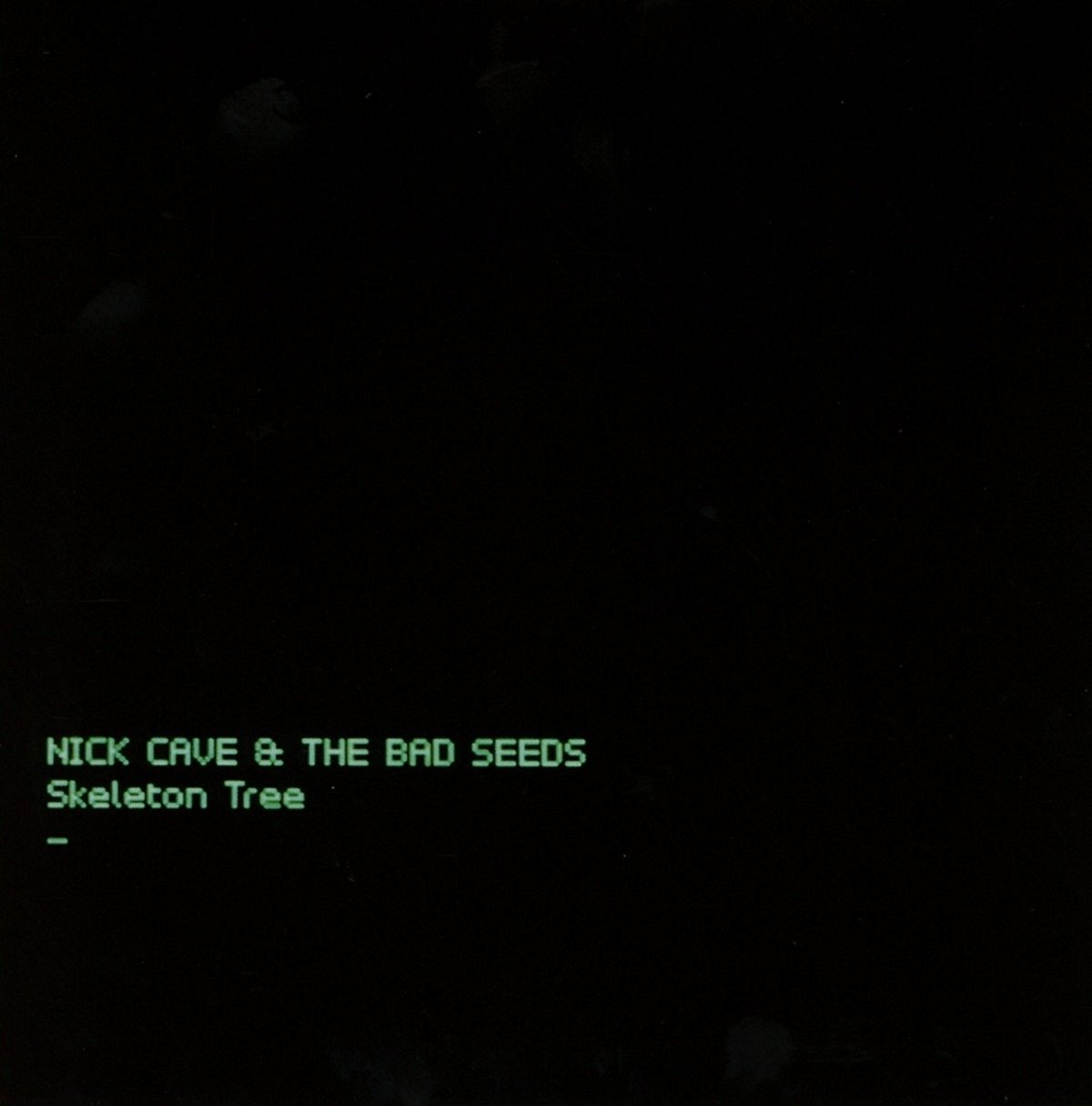
2. Skeleton Tree by Nick Cave & the Bad Seeds
Released: September 9
   You're sitting at the desk drinking vodka from a mug in an empty room. With his voice, he's calling you. With his voice, Nick Cave is calling you. “Jesus Alone” opens the sixteenth album from Nick Cave & the Bad Seeds with a rhino-breathing vibration that pulsates from end to end. Skeleton Tree is a cloudy-eyed meandering through the forests of Cave’s mind. It captures him in a whirlpool of emotion as he attempts to create art in the aftermath of the tragic death of his 15-year old son, Arthur.
   In July of 2015 Arthur fell 60 feet off the Ovingdean Gap cliffs overlooking the English Channel in Brighton. Reportedly, he had taken LSD with friends and separated after experiencing a bad trip. The event is deeply imprinted in Cave’s trembling baritone, but hidden in the code of his indirect lyrics. You feel it rather than simply hearing about it. The songs move with the rhythm of the chilling wind. Sparse piano notes wash away in the reverb of dark wandering tones. It sounds like unimaginable hurt. “Rings of Saturn” reads as a powerful ode to his wife’s motherly strength in the face of family tragedy. "Anthrocene" sounds like it could be a remix from Liars or Thom Yorke.
   “I used to think that when you died you kind of wandered the world,” Cave sings on “Girl In Amber.” “Well, I don't think that any more the phone it rings no more.” We are particle size when seen from a distance. Insignificant, scant, a blip. We live and we die and on the world turns. Cave knows this. It’s the very principle lurking behind each lyric and on Skeleton Tree he deals with the haunt like a master poet.

1. Blackstar by David Bowie
Released: January 8
   David Bowie was in the top tier of rock and roll superstars, a god on earth, living breathing cultural history. The fact that his surprising death on January 8th surreptitiously worked as promotion for his 25th album, Blackstar, makes it all the more surreal. Was he really beamed to earth at a young age with his rocketing rise to super-stardom already planned out? The album is extravagant, ghostly, teetering on the outskirts of what is considered to be a traditional rock and roll album. It swivels and sinks into the poorly lit backroom of the musical mansion Bowie built over his fifty-plus-year-career.
   Blackstar is a seven-song voyage, a trek through the panicked headspace of someone too aware of their mortality. It shifts in moods and tempos, wandering, but never too far. The title track is a ten-minute ride alongside Bowie as he passes through the layers of Heaven. The song wears many faces, turning inside out and evolving with the minutes. Blackstar picks up with “‘Tis A Pity She Was A Whore.” A heavyset drum and bass union churns through the song as it progresses into a perpetual Coleman swirl, horns gone akimbo. Bowie hits the high notes with a twisted sadness, a hidden anarchy while singing the title line. You can see his chiseled grin slowly rise with each word.
   “Lazarus” is when the listener begins to really ache. The song saunters in with a clean, melancholic guitar scale and steady drums. But, then these soft devious horns slither in slightly offbeat. When Bowie enters he sings, “Look up here / I’m in heaven,” and your heart skips a beat. In his slow drift outward he’s catching the wind currents like the bluebird without misgiving. Blackstar is a lasting statement to not only David Bowie’s artistry, but to how he lived his life through that artistry. He worked hard through the end of his days to give us a product he’d be remembered by, a final soundtrack to the epilogue of a life lived in constant creation.

Best of the Rest:
[L-R] Ape in Pink Marble by Devendra Banhart / A Seat at the Table by Solange / Sonoran Depravation by GATECREEPER / Strangers by Marissa Nadler


September 18, 2016

FILM REVIEW: "One More Time With Feeling"

Nick Cave Tries to Deflect
His Most Upfront Hurt in Doc
     As Nick Cave and the Bad Seeds rehearse Else Torp sings her part on the new song, “Distant Sky.” The camera zooms out the pace of rising mist through the ceiling to show the recording studio, its neighborhood, its little corner in southern England and the whole of Earth as it turns into another Sunday.
     “We are a tiny blue dot in a moonbeam,” Cave narrates over himself riding in a car through London’s night streets in a scene from One More Time with Feeling, the group’s new in-studio documentary. We are particle size when seen from a distance. Insignificant, scant, a blip. We live and we die and on the world turns. Cave knows this. It’s the very principle lurking behind each lyric.
     One More Time with Feeling, directed by Andrew Dominik, follows Cave, along with dark-eyed, black-whiskered instrumentalist Warren Ellis and the other Bad Seeds during the recording for their new album, Skeleton Tree. More specifically, though, it’s about Cave caught in a whirlpool of emotion as he attempts to create art in the aftermath of the tragic death of his 15-year old son, Arthur.
     In July of 2015 Arthur fell 60 feet off the Ovingdean Gap cliffs overlooking the English Channel in Brighton. Reportedly, he had taken LSD with friends and separated after experiencing a bad trip. In the film the horrific event is spoken about only in background statements without context and never with detail. There is talk of something unfortunate happening, a far-off hurt, but what or to whom is unclear. Arthur’s name isn’t even mentioned until near the end when it becomes very clear what this is all about.
     Arthur, the beautiful blue-eyed boy, left behind his twin brother, Earl Cave, to mourn with his parents. In One More Time we get a peek into Nick Cave, the Well Adjusted Family Man, a fairly rare sight. We see the family joking around, finding strength together. Cave speaks lovingly of his wife Susie Bick and how they worked through the tragedy together. “Happiness is our revenge,” he says about getting over the cruelty of what happened.
     The result of all this becomes the nine songs on Skeleton Tree, their sixteenth album. Deliberate cameras capture the process. Some of the footage was filmed using “this ridiculous black and white 3D camera,” Cave says. It soars around the recording studio, embedded in corners of walls and falling through circular stairwells. It captures the quiet moments between creativity, focusing on plugs in walls, sounding boards, cracks in door frames and conversations in the next room.
Still from One More Time With Feeling
     Throughout One More Time the film crew is often visible, becoming almost another character. Everyone is very self-aware that filming is in progress and how foolish it seems. In a sense this is a movie about making a movie about making an album. A circular track is laid out around Cave’s piano in the middle of the studio. As he plays gloomily a team of six men huddled on what looks like a toy train circles slowly around him.
     To allow a camera crew to capture you unguarded is some kind of artistic bravery. Cave keeps it together, even shares a few laughs, but there’s an intense sadness hiding behind the hard outer Cave exterior. He is very open and honest detailing the difficulty of trying to make a record, trying to structure songs, while surrounded by trauma. Arthur’s death, he explains, disrupted the creative process.
     Cave paces the room, dejected about his work, unsure of certain piano notes, overdubbing in doubt. So much vulnerability underneath those dark black bushy brows. He recoils, unable to make sense of the tragedy, unwilling to find within it poetic justice.
     When asked about his recent lyrical distancing from the personal narrative, he struggles to explain how incredulous it is to try and define an event in measured verse. Writing from the depth of his personal experience in this tragedy, he says, would be a disservice to Arthur.
     “Time is elastic,” he says. We get further and further from a particular moment in time, but like a stretched out rubber band, we eventually snap right back.

source: http://imp

October 08, 2014

FILM REVIEW: "20,000 Days On Earth"

Cover design for 20,000 Days On Earth.  Photo courtesy of DraftHouseFilms.com.
Near the end of the film 20,000 Days On Earth, Nick Cave, with the Bad Seeds behind him, performs among a throng of fans. He grabs the hand of a young girl, pressing her palm onto his chest as he whispers into the microphone, "Can you feel my heartbeat?" He repeats the line, at the end of “Higgs Boson Blues,” until the fan can only look him in the eye and nod, yes.
   When the song ends, Cave jumps back onto the stage, his energy restored. "When you enter the heart of the song," Cave explains in the film about performing live, "you can be taken away...and feel godlike."
   The improvisational documentary by filmmakers Iain Forsyth and Jane Pollard is meant to play like one full fictional day in the life of one of rock and roll's greatest frontmen. The audience sees how the man is currently living and working and encounters a glimmer of insight into his creative process.
   Throughout 20,000 Days On Earth, the Bad Seeds are hard at work on their fifteenth album, Push The Sky Away. Cave and his right-hand man, multi-instrumentalist Warren Ellis, work on an off-the-cuff song about Lionel Richie. They share a lunch and reminisce about a Nina Simone performance at the Cave-curated Meltdown Festival in 1999 that left them with mouths agape. Ellis rides an elliptical and conducts a children’s choir for the recording of “Push The Sky Away.” The viewer is given a rare opportunity to gaze deeply into Cave's dark blue eyes as he sings.
   The film does not follow the basic linear retelling of the average rock documentary. Instead, it’s Cave offering stories of his early days with Birthday Party, growing up a brooding boy in a small Australian town and balancing church life with drugs when he was a young adult.
   At one point during Cave’s day, he stops to revisit old photographs and various pieces of memorabilia from his life. He seems delighted, even giddy, to be pouring over and celebrating his past.
   Rather than simply regurgitating old clips from a storied career, what the filmmakers have done is show their subject's emotional reaction to his past. This is where the film succeeds most.
   Seeing a bubbly Nick Cave, grinning from ear to ear, looking over photos of himself isn’t exactly the image one would expect from the cagey prince of goth. He isn’t the most forthcoming about personal details so it’s welcoming to witness him acknowledge his own personal and creative past.
   The film intermittently is cut with Cave opening up to his therapist. The whole time the therapist looks just as transfixed as the audience by what his patient is telling him.
   When asked about his first sexual experience, Cave discusses being turned on at 15 by a girl with black hair and a very white face. He insists the experience wasn’t outrightly sexual, but admits that her contrasting features flipped a switch inside him. At that moment he became aware of the power of arousal--a power that would go on to greatly influence his songwriting.
   The most stunning revelation of the film is that the man with eyes like coal has his own set of fears. As Cave drives through rainy Bristol and navigates his day, he looks back on the past with a host of guests. With longtime collaborator and friend Kylie Minogue in the backseat of his car, he discusses the vulnerabilities of being a rock star.
   His whole life, he explains, he imagined becoming the man he is today: bold, acerbic, lyrical, confident, a showman. The success of becoming a famous persona has outweighed his inner self and he finds it difficult to retreat to any sort of normal life. Not that he would want any soft of “normal” life.
   Ultimately the film inspires the creative heart to dig into something deep, something profound. We live in our work. Our art is our reality. Cave talks a lot about memory and how our personal histories are shaped only by what we remember. His biggest fear, he says, is to lose his memory because it would then be as though he were never there. Songwriting for him is the net that captures his life experiences as he finds a perspective on them that makes sense.
   Find out where 20,000 Days On Earth is playing in your city here.

July 29, 2014

Nick Cave & The Bad Seeds at Prospect Park, Brooklyn

Nick Cave inserts himself into the crowd at Prospect Park, Broolyn. All photos by Eli Jace.
"Some people say it’s just rock and roll / Ah, but it gets ya right down in your soul” -- from "Push the Sky Away"
   He’s that bad motherfucker called Nick Cave and last Saturday night he and his renegades in The Bad Seeds played Prospect Park in Brooklyn, potentially waking up God from a deep, deep sleep. 
   They kept the crowd in hysterics all night with a career-spanning set. By all accounts it was a perfect performance from one of the most gripping musical acts around. 
   The Bad Seeds took the stage to the cunning, rumbling bass loop that starts “We Real Cool” off their newest album, the magnificent Push The Sky Away. The lights were dark, except for a line of downcast blues at the back. 
   As always, when the impeccably dressed Nick Cave enters the picture, the first, most recognizable thing you notice are his eyebrows. Like his hair, slicked back, and his finely pressed suit, they are jet black and frame his leering, distrustful eyes. They seem to move out ahead of the rest of his body. 
   Cave, the man, stood at the edge of the stage, lit-up in dark cobalt blue light. His eyebrows flipped inward like they were trying to touch as he began, “Who took your measurements from your toes to the top of your head? Yeah, you know.”
   They kept to the new album and played “Jubilee Street” with perfect transcendental precision. The strings grew manic while Cave slithered in one spot, reaching lyrical climax. “I am alone now / I am beyond recrimination…,” he sang as the song shot out over Prospect Park and lingered into the Brooklyn air. “I’m transforming / I’m vibrating / I’m glowing / I’m flying / Look at me know!” 
   Only two songs in and the jubilation was already sky-high. Saturday’s show came at the tail end of the Australian group’s second tour of the States for their fifteenth album, Push the Sky Away, released last year. The show was one of the slotted benefit events for Celebrate Brooklyn. 
Devendra Banhart alone on stage.
   Nicole Atkins started the night off with songs off her new album, Slow Phaser. Following her was Devendra Banhart who gave a shambolic performance with strands of songs from all over his discography. The stage may as well have been a living room as he lazily teased out versions of “Body Breaks,” “Golden Girls,” “Little Yellow Spider” and others. Nobody was trying to hide it. Everyone was present for Nick Cave & The Bad Seeds and even the openers sensed it. 
   Cave spent most of the show gliding from one side of the stage to the other, engaging heroically with the crowd. As the roaming “Higgs Boson Blues” concluded, Cave was nearly lying on top of the audience. “Miley Cyrus floats in a swimming pool in Toluca Lake,” he sang between heaves as the song died, “and you’re the best girl I ever had.” 
   Every sinewy step he took radiated with energy. The man moves with alarm, like a wiley Dick Tracy villain in an expensive suit. He’s one of the greatest frontmen the world has seen and The Bad Seeds expertly back up his every physical and lyrical outburst.
   The night’s emotional apex struck the middle of the set when Cave took to the piano for “Love Letter” and “Into My Arms.” Positioned sideways, he played the keys with aching clarity as he sang about love’s arresting ways.
   Midway through, Cave ditched the black suit jacket to reveal a gold lamé dress shirt underneath. By the end it was rumpled with sweat. 
   The set ended with a gunshot and some gauze to help the wound. “Stagger Lee” was as forceful, ruthless and vile as one could hope the murder ballad to be. Then “Push the Sky Away” flooded the park with its ominous drone.
   The band returned for two encores, first tearing through the classics “Red Right Hand” and “Deanna.” The second was unexpected with Cave wading into “The Lyre Of Orpheus” for the finale. “Orpheus looked at his instrument / And he gave the wire a pluck,” Cave sang. “He heard a sound so beautiful / He gasped and said, ‘Oh my god…’”