Showing posts with label David Bowie. Show all posts

July 17, 2018

REVIEW: Celebrating David Bowie March 7

When planet earth lost its Starman David Bowie in 2016 the landscape went dark. The man was gone. But, for the rest of us, thankfully, his music remains locked in digital space and in our heads.
     Celebrating David Bowie, the touring tribute, features some of Bowie’s closest collaborators and friends. The concert is a reminder of the musical reach Bowie had, working with numerous musicians over his career to realize his creative concepts that would help define rock and roll’s kooky androgynous side.
     Each show on this tour has had its unique lineup making this far different from a cakewalking tribute band with no real connection to the star. The group that performed in Mesa, Arizona at the Mesa Arts Center on March 7 in the Ikedea Theater had representation from many of Bowie’s colorful eras.
     Mike Garson started playing piano for Bowie with 1973’s Aladdin Sane and acted as host of the night’s festivities. Earl Slick played guitar on Diamond Dogs, Young Americans, Station to Station, Heathen, Reality and The Next Day. Guitarist Gerry Leonard worked with late-career Bowie and bassist Carmine Rojas toured with him in the eighties.
     Filling out the rest of the stage was British musician Mr. Hudson and Joe Sumner, who fronts Fiction Plane (and is very clearly the spawn of Sting). They traded vocals on a few songs and added extra guitar and percussion. Holding down the drums throughout was Lee John Madeloni, Slick’s son.
     But the big surprise, sauntering from the back shadows of the stage, after the first song, “Disco King” began, was Bernard Fowler. (above) Longtime Rolling Stones fans will recognize him instantly as part of the back-up team to Mick Jagger’s melodies the past few decades. On this night he took on a majority of the vocals. Fowler stepped out and proved his strength and agility as a front man. He moved with the music, rose his hands into the air, shook hips and leaned down into the front row to kiss a girl who’d been standing.
     Fowler then blasted through “Rebel, Rebel,” “Fame,” and “Moonage Daydream,” during which he leaned far over the stage, pointing to his eye like a manic soothsayer. “Keep your electric eye on me, babe,” he screeched, “put your ray gun to my head.” He milked the spotlight and performed every lyric. Yeah, Fowler got his Jagger on.
     It’s telling that it took three accomplished singers to match the vocal range of one man. But, each found their niche in Bowie’s scale. Sumner had the operatic power of eighties Bowie holding notes for entire sheets of music. Hudson nailed early, very British, coy Bowie on “Starman,” “Changes,” a heart-stopping “Five Years,” and others. Fowler had the power to reach Bowie’s full-throated emotion and lower register and at times sounded eerily like the man himself.
     At the midway point the group dropped in “Win,” the only track from 1975’s Young Americans. Fowler sang syrupy and charged lurching into the depths of debonair Bowie. Masterfully representing Bowie’s cocaine era, Slick (below, left) took the lead on “Station to Station” with a crumbling wall of feedback that oozed into the crunching stomp of what was the introduction of a new persona. “The return of the Thin White Duke,” Fowler sang, low in the sound, “throwing darts in lovers’ eyes.”
     A real treat was Garson getting candid, adding insight into songs and telling stories, humanizing the icon. For example, the time, 1973, when Bowie fell on stage leaving the band to wonder if it was part of the act, or decades later, when a rare brush with backstage nerves from Bowie saved the show from electrical misfire and sure embarrassment. Pride and sadness weren’t far from each other when Garson spoke these stories of his friend.
     For “Aladdin Sane,” Garson explained, Bowie wanted something extra out of bounds. He then went into the whirlwind piano that weaves through the song. This version, played decades later, was spot on and warped into a long batty outro with every other musician winding to a halt to witness Garson pound on the keys in hypnotic isolation. Then came “Ziggy Stardust” with Mr. Hudson (above, center) on vocals and the crowd went to their feet for the rest of the night.
     Sumner powered a chunk of the crowd to take over the front rows with “All the Young Dudes” to end the set. Then they returned and hit us with an encore of “Andy Warhol,” “Life On Mars,” “Diamond Dogs,” and “Heroes.” The idea for Celebrating David Bowie first sprouted in January 2017 with a one-off show to celebrate Bowie’s 70th birthday and to mark one year of his passing. The loss of icons doesn't come easy, but at least with David we now know for certain, there's a starman waiting in the sky.

**
"Disco King"
"Rebel Rebel"
"Moonage Daydream"
"Fame"
"Changes"
"Space Oddity"
"Conversation Piece"
"Starman"
"Win"
"Rock and Roll Suicide"
"Five Years"
"Let's Dance"
"Jean Genie"
"Station to Station"
"Lady Grinning Soul"
"Aladdin Sane"
"Ziggy Stardust"
"Suffragette City"
"All the Young Dudes"

encore
"Andy Warhol"
"Life on Mars"
"Diamond Dogs"
"Heroes"

December 30, 2016

The Year's 5 Greatest Albums

   2016 was a huge year for new music. Mainstream headliners like Red Hot Chili Peppers, Wilco, Blink 182, Green Day and Metallica returned for another gasp. Years-in-hype releases from Radiohead, Kanye West, Solange, Frank Ocean and Drake finally came forward. Neil Young put out two albums while Iggy Pop, The Rolling Stones, David Bowie and Leonard Cohen added to their mountainous discographies. Here are the year's best releases:

5. Post Pop Depression by Iggy Pop
Released: March 18
   Iggy Pop ages like the big oak tree that everyone pissed on in college. He soaks it up and moves forward. For Post Pop Depression, his seventeenth album, he teamed up with Josh Homme (Queens of the Stone Age, Eagles of Death Metal, Them Crooked Vultures), Dan Fertita (QOFSTA, The Dead Weather) and Matt Helders (The Arctic Monkeys). The collaboration makes perfect sense. Homme preserves the scuzz of Pop’s early days with the Stooges, but adds to it a tight-lipped air of cool. The guitars are thick like hamburger meat running alongside Pop’s chiseled scowl and the rhythm section provides a steady anchor.
   While listening to "Gardenia" the screws in your neck loosen. The whole song rides on a rollicking bass line that gets the body moving like an inflatable air dancer. The chorus is an act of hypnosis. “All I wanna do is tell Gardenia what to do tonight,” Pop sings in an up and down cascade with Homme’s high-pitched vocals shadowing in the background. "American Valhalla," sounds like background music from a lost episode of The Addams Family. “I shot my gun / I used my knife / This hasn’t been an easy life,” Pop sings.
   When the cavernous maw of Iggy Pop unhinges the grumble of decades past unfurls out. With every word uttered one can visualize the deep creases of his face moving in rhythm. His Adam’s apple vibrates back and forth with each syllable. "Vulture" starts with a wooden guitar lick that sounds like a throwaway demo. But, then Pop's voice drops into the song like sewer sludge and you're suddenly put on alert. “Fat black vulture white head hung low / Chewing dead meat by the side of the road / His evil breath smells just like death,” he warns dryly. Post Pop Depression ends with “Paraguay” a lacerating beat down with Pop calling bullshit on our world of constant unending information and the phonies that willingly prop it up. The snarling hero of our destructive tendencies still has enough saliva to spit back into the world.

4. Anti by Rihanna
Released: January 28
   Ri Ri, you make my heart ache. Anti was the most unhealthy addiction of the year. I got fat off of this. The downward cadence on "Needed Me" alone -- "but baby you-ou-ou-ou-ou needed me" -- makes Anti hard to put away. She gets cold with an ex-lover over a simple beat and an expanding wah-wah. When Rihanna sing, it's in a downward spiral. "Didn't they tell you that I was a savage? / fuck your white horse and your carriage." Somewhere an ex is crying in his beer in a dark bar. Every other song could've been radio signals from the ocean and this would still be on the list somewhere. BUT, add in "Work," "Consideration," "Kiss It Better," "Desperado," "Woo," "Yeah, I Said It"--come on, Lord please.
   On "Consideration," Rihanna gives the assist to SZA. Their voices move around each other in an uneven orbit. SZA bellowing beautifully bent notes; Rihanna soaring in an upward swing. The big single, "Work," though, I barely know what she's singing, gets catchier as time goes on. It's one of her best singles. She sings against a coarse electronic tremble that never lets on "Woo." Then, when you think it can't any more vicious, Rihanna screams, "I don't mean to really luh you / I don't mean to really care about you no more." Anti is a near classic from Rihanna. From song-to-song it dips and crashes through different styles, some all her own, some borrowed. Her powerful voice continues to lurk its way towards the outer extensions of R&B.

3. Gore by Deftones
Released: April 8
   Deftones continue to deliver, expanding their sound in subtle and intricate ways. They remain rooted in the punk metal headrush of their debut Adrenaline, but with each album since the sound has grown heavier and more melodic in equal parts. Gore, their eighth, furthers the formula into peak Deftones territory.
   Song structure is rarely straightforward with many little fine twists and turns. If you headbang to this without knowing the song, you’ll fast get off beat. “Prayers/Triangles,” opens the album with a slow, meandering guitar the drums break and the chorus slashes through. Throw the bottle at the wall when “Doomed User” comes on. Deftones to the core. "Geometric Headdress" erupts like a tank through a wall. Chino Moreno's scream scorches like a propane tank left to explode. Then ten seconds in it flips to an offbeat rumble with a wily guitar pushing the listener out of rhythm. Midway through "Hearts/Wires" settles over the album like the final rays of sunlight. A few simple guitar pluckings crawl over each other while Moreno sings of a memory lost. “The slit in the sky where you left / is all I see,” he aches. The slow build is hypnotizing.
   Deftones just continue to breathe new life into an old sound. Gore, the third album since Vega took over for the late Chi Ching on bass, follows Koi No Yokan and Diamond Eyes on a continuing upscale of creativity that doesn’t seem to be slipping any time soon.

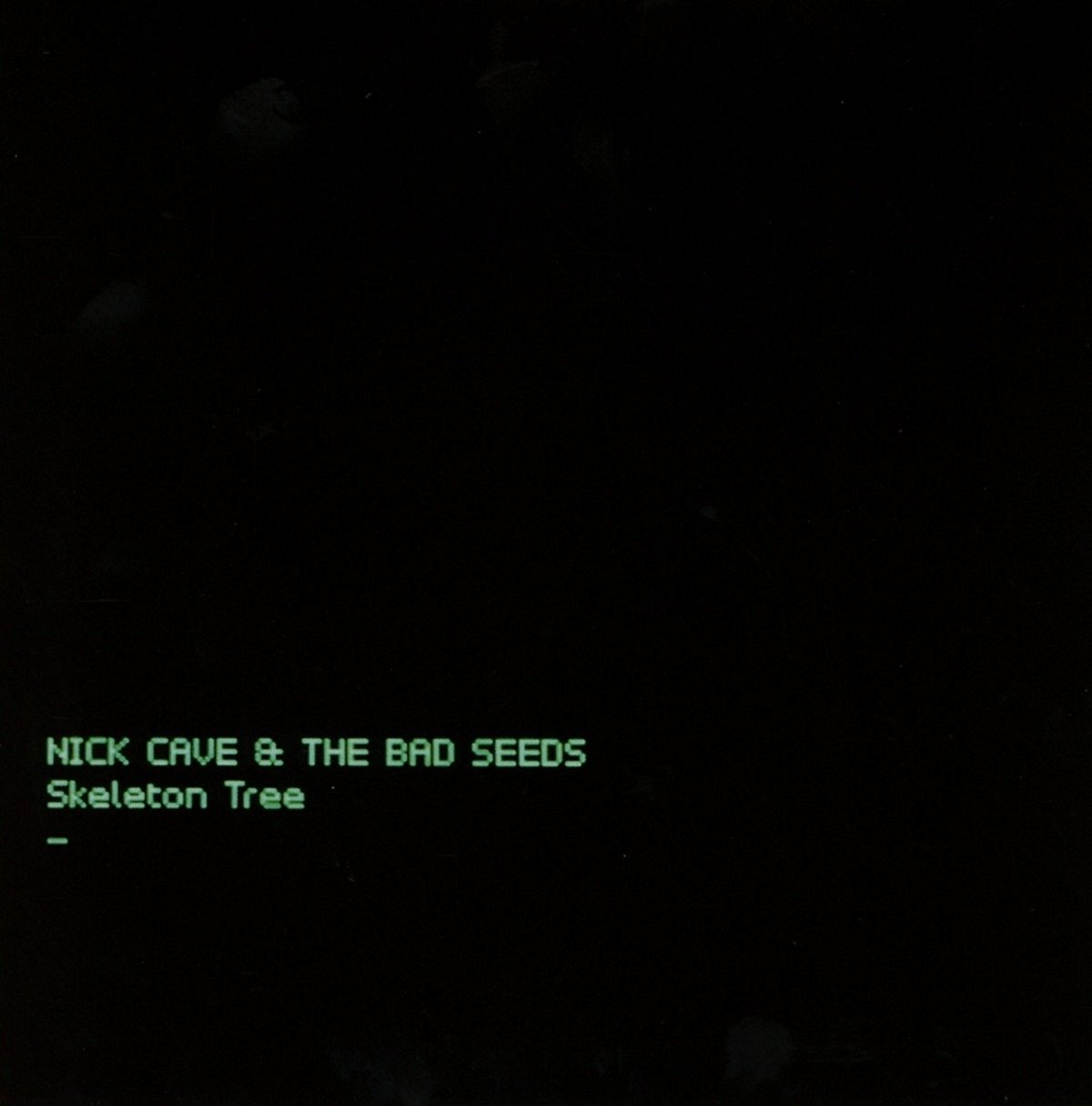
2. Skeleton Tree by Nick Cave & the Bad Seeds
Released: September 9
   You're sitting at the desk drinking vodka from a mug in an empty room. With his voice, he's calling you. With his voice, Nick Cave is calling you. “Jesus Alone” opens the sixteenth album from Nick Cave & the Bad Seeds with a rhino-breathing vibration that pulsates from end to end. Skeleton Tree is a cloudy-eyed meandering through the forests of Cave’s mind. It captures him in a whirlpool of emotion as he attempts to create art in the aftermath of the tragic death of his 15-year old son, Arthur.
   In July of 2015 Arthur fell 60 feet off the Ovingdean Gap cliffs overlooking the English Channel in Brighton. Reportedly, he had taken LSD with friends and separated after experiencing a bad trip. The event is deeply imprinted in Cave’s trembling baritone, but hidden in the code of his indirect lyrics. You feel it rather than simply hearing about it. The songs move with the rhythm of the chilling wind. Sparse piano notes wash away in the reverb of dark wandering tones. It sounds like unimaginable hurt. “Rings of Saturn” reads as a powerful ode to his wife’s motherly strength in the face of family tragedy. "Anthrocene" sounds like it could be a remix from Liars or Thom Yorke.
   “I used to think that when you died you kind of wandered the world,” Cave sings on “Girl In Amber.” “Well, I don't think that any more the phone it rings no more.” We are particle size when seen from a distance. Insignificant, scant, a blip. We live and we die and on the world turns. Cave knows this. It’s the very principle lurking behind each lyric and on Skeleton Tree he deals with the haunt like a master poet.

1. Blackstar by David Bowie
Released: January 8
   David Bowie was in the top tier of rock and roll superstars, a god on earth, living breathing cultural history. The fact that his surprising death on January 8th surreptitiously worked as promotion for his 25th album, Blackstar, makes it all the more surreal. Was he really beamed to earth at a young age with his rocketing rise to super-stardom already planned out? The album is extravagant, ghostly, teetering on the outskirts of what is considered to be a traditional rock and roll album. It swivels and sinks into the poorly lit backroom of the musical mansion Bowie built over his fifty-plus-year-career.
   Blackstar is a seven-song voyage, a trek through the panicked headspace of someone too aware of their mortality. It shifts in moods and tempos, wandering, but never too far. The title track is a ten-minute ride alongside Bowie as he passes through the layers of Heaven. The song wears many faces, turning inside out and evolving with the minutes. Blackstar picks up with “‘Tis A Pity She Was A Whore.” A heavyset drum and bass union churns through the song as it progresses into a perpetual Coleman swirl, horns gone akimbo. Bowie hits the high notes with a twisted sadness, a hidden anarchy while singing the title line. You can see his chiseled grin slowly rise with each word.
   “Lazarus” is when the listener begins to really ache. The song saunters in with a clean, melancholic guitar scale and steady drums. But, then these soft devious horns slither in slightly offbeat. When Bowie enters he sings, “Look up here / I’m in heaven,” and your heart skips a beat. In his slow drift outward he’s catching the wind currents like the bluebird without misgiving. Blackstar is a lasting statement to not only David Bowie’s artistry, but to how he lived his life through that artistry. He worked hard through the end of his days to give us a product he’d be remembered by, a final soundtrack to the epilogue of a life lived in constant creation.

Best of the Rest:
[L-R] Ape in Pink Marble by Devendra Banhart / A Seat at the Table by Solange / Sonoran Depravation by GATECREEPER / Strangers by Marissa Nadler


January 21, 2016

REVIEW: "Blackstar" by David Bowie

Blackstar is Bowie's everlasting
wink from heaven
As I listened to David Bowie's new album Blackstar for the first time, the artist himself, unbeknownst to me at the time, was ascending into eternity. Bowie’s 25th album, and now his last, arrived January 8th on the icon's 69th birthday. Two days later it would be announced in the night that Bowie was dead. He juked us all again. A surprise album. A surprise death. A true artist through his life’s final breath.
   Instantly the dynamic of the music on the album changed. Blackstar couldn't be more fitting in tone and timing. It's extravagant, ghostly, teetering on the outskirts of what is considered to be a traditional rock and roll album. It swivels and sinks into the poorly lit backroom of the musical mansion Bowie built over his fifty-plus-year-career.
   Blackstar is a seven-song voyage, a trek through the panicked headspace of someone too aware of their mortality. It shifts in moods and tempos, wandering, but never too far.
   The title track is a near ten-minute ride alongside the Thin White Duke as he passes through the layers of Heaven. The song wears many faces, turning inside out and evolving with the minutes. At the midpoint of the song the instruments start to lose their beat, pacing around one another in odd rhythms slowing down. It's the sound of our artist exiting earth life and throttling into the next. “I’m a black star,” he sings, catatonically.
   After slowly being peeled during the first track, Blackstar picks up with “‘Tis A Pity She Was A Whore.” A heavyset drum and bass union churns through the song as it progresses into a perpetual Coleman swirl, horns gone akimbo. Bowie hits the high notes with a twisted sadness, a hidden anarchy while singing the title line. You can see his chiseled grin slowly rise with each word.
   “Lazarus” is when the listener begins to really ache. The song, backed up with an authentically creepy video, saunters in with a clean, melancholic guitar scale and steady drums. But, then these soft devious horns slither in just slightly offbeat. When Bowie enters he sings, “Look up here / I’m in heaven,” and your heart skips a beat. In his slow drift outward he’s catching the wind currents like the bluebird without misgiving.
   The album continues its seesaw with “Sue (Or In A Season Of Crime).” Opening with a scattershot drumbeat, the song flails wildly. Genres are taken apart, thrown onto the floor and resculpted. Everything falls on the offbeat with Bowie weaving vocals in a posthumus quiver. “Sue, the clinic called / The x-ray’s fine,” he sings. The listener’s head ping pongs into full force headbanging by the finish.
   Bowie gives some of his strongest, most outlandish, hair-raising vocals on Blackstar and “Girl Loves Me” represents that best. Lost on the calendar, Bowie sings, "Where the fuck did Monday go?" The song works on hypnosis, pulling the listener into a trance. The final song, “I Can’t Give Everything Away,” finishes the album on an upbeat, celebratory note.
   Blackstar is a lasting statement to not only David Bowie’s artistry, but to how he lived his life through that artistry. He worked hard through the end of his days to give us a product he’d be remembered by, a final soundtrack to the epilogue of a life lived in constant creation. Your man did us proud, Iman.

Key Tracks: all

source: http://imp

October 30, 2013

Eye of the Lou (1942-2013)

     The man was dressed in black head to toe. His head nearly touched the ceiling. If his back wasn't bent like a spoon, it would've crashed through the tiles. Before the houselights went down the tall figure I would come to realize was Lou Reed, ambled out slowly to the front row and took a seat.
The show was a preview of performance artist Laurie Anderson's in-progress play, "Delusion," hosted by MASS MoCA in North Adams, Massachusetts. I was fortunate enough to have had a conversation with Anderson, Reed's wife since 2008, a week prior for an article in The Berkshire Eagle. 
When the play finished I expected a crowd to form around Reed, but to my surprise the audience only stretched and yawned in their seats. I marched down the isle to the front row, turned left and stood, face-to-face, looking upward, at the rock and roll poet and feedback maestro. He was standing straight, stretching his legs and somehow I found his eyes. 
"It's a pleasure to meet you," I said, holding out my hand. He shook it, mildly stunned, a slight confused, and replied, "It's a pleasure to meet you, too." Then the silence hung, his eyes fixed harder on mine, and I had to get out of there.
Lou Reed's exit from earth this past Sunday has been a slow, slimy shock. The man wrote "Walk On The Wild Side," "Perfect Day," "White Light/White Heat," "Heroin," "Ecstasy." God, the list goes on. He fronted The Velvet Underground, America's greatest rock band. He shot smack, did coke, kissed David Bowie on his lips, gave Iggy Pop his wings and inspired every musician who zonked-out to "Venus In Furs." He is every bit New York City's man. (Woody Allen, Jay Z, Jerry Seinfeld all take a backseat.) He exemplified every aspect of his home city--the drugs, the people, the hustle, the implosion of new music and art, the politics, the violence, new age thought--embedding it deeply in his work and his towering personae.  
When the first shrill sounds of The Velvet Underground leapt from cruddy amplifiers in the psychedelic Sixties, the basic pop structures for modern music would never be the same. No one else could ever meld the harmonic infatuation of doo-wop with the guts-in-the-oven sound collage of blind squelching guitar feedback, fierce like a kitchen knife slowly wedging into your ear. 
Reed was an abstractionist with the exact blueprints for The Song tattooed on his brain. He is at the helm of all things experimental in rock and roll. He taught the world that music doesn't have to be clean or have perfect tonal quality. The words don't have to rhyme, or even fall slickly with the beat. While most artists in the Sixties and Seventies turned to the surreal and psychedelic for their lyrical output, Reed was giving us the scuffed words of the street. The dead-pan wit of his lyrics are fraught with realism and touch on subjects other than the usual love and heartbreak. His tales are hard, low-down and dirty; almost too truthful to bear.
In the decades following the dissolution of VU Reed would release brave, unctuous, unapologetic albums, scattered across the spectrum of what music could be. Metal Machine Music (1975) is the sound of forty amplified guitars being taken apart while Hudson River Wind Meditations (2007) is the sound of a single breeze floating over the mind. In between the classic songs are too many to quantify. With Reed's passing, our planet has lost a legend. New York City has lost its reverent son. Poetry has lost its rebel of the street. Rock and roll has lost its godfather. He leaves behind the most daring catalog of music from an artist in any era, blowing out all preconceived guidelines for the following generations. 

Lou, Lou, Lou, it's the beginning of a great adventure. Rest in peace.


Lou Reed's Classic Albums
The Velvet Underground (1969)
Transformer (1972)
Ecstasy (2000)
The Velvet Underground & Nico (1967)
Coney Island Baby (1975)
Loaded (1970)
New York (1989)
The Blue Mask (1982)