

When planet earth lost its Starman David Bowie in 2016 the landscape went dark. The man was gone. But, for the rest of us, thankfully, his music remains locked in digital space and in our heads.
Celebrating David Bowie, the touring tribute, features some of Bowie’s closest collaborators and friends. The concert is a reminder of the musical reach Bowie had, working with numerous musicians over his career to realize his creative concepts that would help define rock and roll’s kooky androgynous side.
Each show on this tour has had its unique lineup making this far different from a cakewalking tribute band with no real connection to the star. The group that performed in Mesa, Arizona at the Mesa Arts Center on March 7 in the Ikedea Theater had representation from many of Bowie’s colorful eras.
Mike Garson started playing piano for Bowie with 1973’s Aladdin Sane and acted as host of the night’s festivities. Earl Slick played guitar on Diamond Dogs, Young Americans, Station to Station, Heathen, Reality and The Next Day. Guitarist Gerry Leonard worked with late-career Bowie and bassist Carmine Rojas toured with him in the eighties.
Filling out the rest of the stage was British musician Mr. Hudson and Joe Sumner, who fronts Fiction Plane (and is very clearly the spawn of Sting). They traded vocals on a few songs and added extra guitar and percussion. Holding down the drums throughout was Lee John Madeloni, Slick’s son.


But the big surprise, sauntering from the back shadows of the stage, after the first song, “Disco King” began, was Bernard Fowler. (above) Longtime Rolling Stones fans will recognize him instantly as part of the back-up team to Mick Jagger’s melodies the past few decades. On this night he took on a majority of the vocals. Fowler stepped out and proved his strength and agility as a front man. He moved with the music, rose his hands into the air, shook hips and leaned down into the front row to kiss a girl who’d been standing.
Fowler then blasted through “Rebel, Rebel,” “Fame,” and “Moonage Daydream,” during which he leaned far over the stage, pointing to his eye like a manic soothsayer. “Keep your electric eye on me, babe,” he screeched, “put your ray gun to my head.” He milked the spotlight and performed every lyric. Yeah, Fowler got his Jagger on.
It’s telling that it took three accomplished singers to match the vocal range of one man. But, each found their niche in Bowie’s scale. Sumner had the operatic power of eighties Bowie holding notes for entire sheets of music. Hudson nailed early, very British, coy Bowie on “Starman,” “Changes,” a heart-stopping “Five Years,” and others. Fowler had the power to reach Bowie’s full-throated emotion and lower register and at times sounded eerily like the man himself.
At the midway point the group dropped in “Win,” the only track from 1975’s Young Americans. Fowler sang syrupy and charged lurching into the depths of debonair Bowie. Masterfully representing Bowie’s cocaine era, Slick (below, left) took the lead on “Station to Station” with a crumbling wall of feedback that oozed into the crunching stomp of what was the introduction of a new persona. “The return of the Thin White Duke,” Fowler sang, low in the sound, “throwing darts in lovers’ eyes.”


 A real treat was Garson getting candid, adding insight into songs and telling stories, humanizing the icon. For example, the time, 1973, when Bowie fell on stage leaving the band to wonder if it was part of the act, or decades later, when a rare brush with backstage nerves from Bowie saved the show from electrical misfire and sure embarrassment. Pride and sadness weren’t far from each other when Garson spoke these stories of his friend.
For “Aladdin Sane,” Garson explained, Bowie wanted something extra out of bounds. He then went into the whirlwind piano that weaves through the song. This version, played decades later, was spot on and warped into a long batty outro with every other musician winding to a halt to witness Garson pound on the keys in hypnotic isolation. Then came “Ziggy Stardust” with Mr. Hudson (above, center) on vocals and the crowd went to their feet for the rest of the night.
Sumner powered a chunk of the crowd to take over the front rows with “All the Young Dudes” to end the set. Then they returned and hit us with an encore of “Andy Warhol,” “Life On Mars,” “Diamond Dogs,” and “Heroes.” The idea for Celebrating David Bowie first sprouted in January 2017 with a one-off show to celebrate Bowie’s 70th birthday and to mark one year of his passing. The loss of icons doesn't come easy, but at least with David we now know for certain, there's a starman waiting in the sky.
**
"Disco King"
"Rebel Rebel"
"Moonage Daydream"
"Fame"
"Changes"
"Space Oddity"
"Conversation Piece"
"Starman"
"Win"
"Rock and Roll Suicide"
"Five Years"
"Let's Dance"
"Jean Genie"
"Station to Station"
"Lady Grinning Soul"
"Aladdin Sane"
"Ziggy Stardust"
"Suffragette City"
"All the Young Dudes"
encore
"Andy Warhol"
"Life on Mars"
"Diamond Dogs"
"Heroes"
Fowler then blasted through “Rebel, Rebel,” “Fame,” and “Moonage Daydream,” during which he leaned far over the stage, pointing to his eye like a manic soothsayer. “Keep your electric eye on me, babe,” he screeched, “put your ray gun to my head.” He milked the spotlight and performed every lyric. Yeah, Fowler got his Jagger on.
It’s telling that it took three accomplished singers to match the vocal range of one man. But, each found their niche in Bowie’s scale. Sumner had the operatic power of eighties Bowie holding notes for entire sheets of music. Hudson nailed early, very British, coy Bowie on “Starman,” “Changes,” a heart-stopping “Five Years,” and others. Fowler had the power to reach Bowie’s full-throated emotion and lower register and at times sounded eerily like the man himself.
At the midway point the group dropped in “Win,” the only track from 1975’s Young Americans. Fowler sang syrupy and charged lurching into the depths of debonair Bowie. Masterfully representing Bowie’s cocaine era, Slick (below, left) took the lead on “Station to Station” with a crumbling wall of feedback that oozed into the crunching stomp of what was the introduction of a new persona. “The return of the Thin White Duke,” Fowler sang, low in the sound, “throwing darts in lovers’ eyes.”

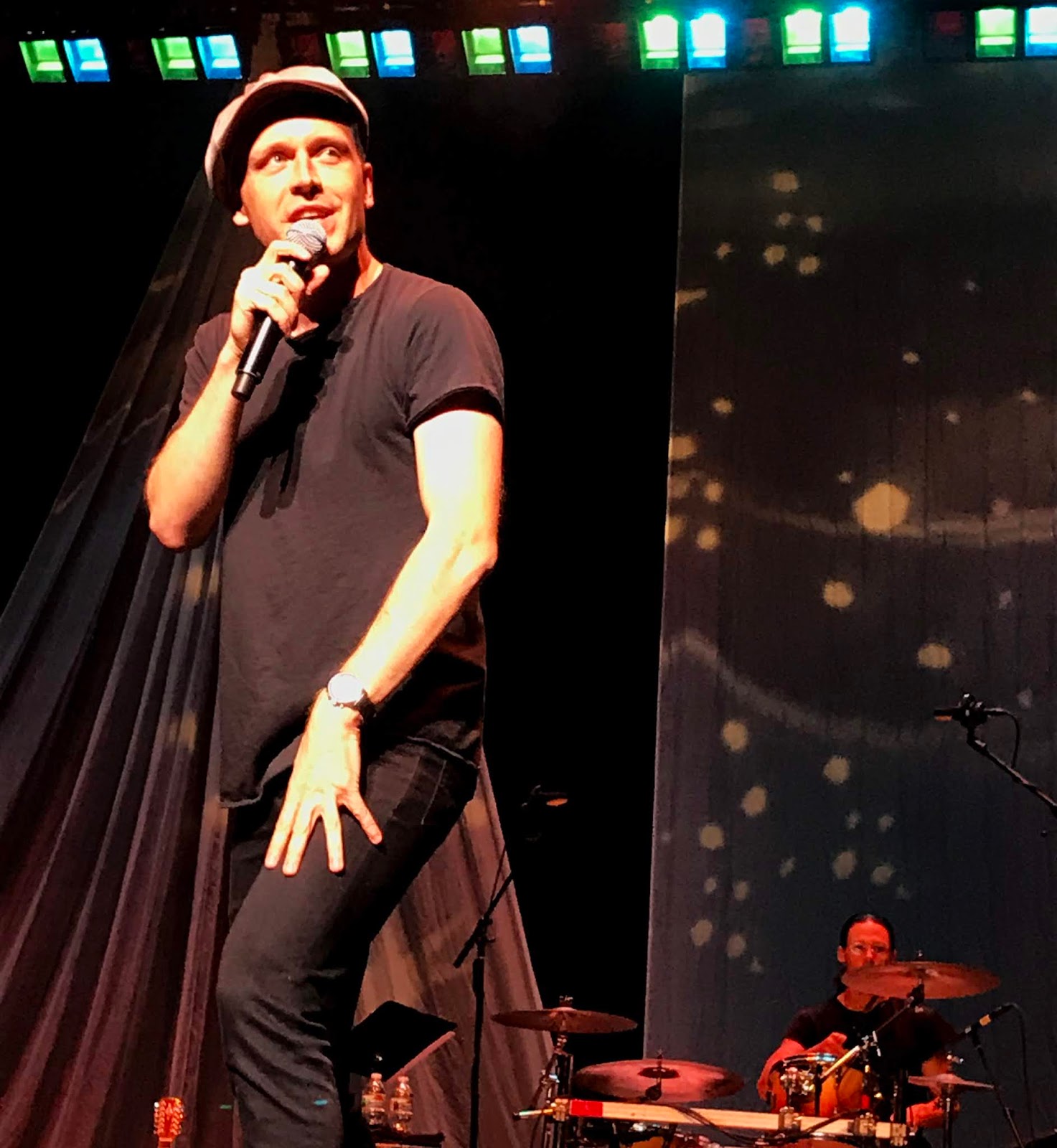

For “Aladdin Sane,” Garson explained, Bowie wanted something extra out of bounds. He then went into the whirlwind piano that weaves through the song. This version, played decades later, was spot on and warped into a long batty outro with every other musician winding to a halt to witness Garson pound on the keys in hypnotic isolation. Then came “Ziggy Stardust” with Mr. Hudson (above, center) on vocals and the crowd went to their feet for the rest of the night.
Sumner powered a chunk of the crowd to take over the front rows with “All the Young Dudes” to end the set. Then they returned and hit us with an encore of “Andy Warhol,” “Life On Mars,” “Diamond Dogs,” and “Heroes.” The idea for Celebrating David Bowie first sprouted in January 2017 with a one-off show to celebrate Bowie’s 70th birthday and to mark one year of his passing. The loss of icons doesn't come easy, but at least with David we now know for certain, there's a starman waiting in the sky.
**
"Disco King"
"Rebel Rebel"
"Moonage Daydream"
"Fame"
"Changes"
"Space Oddity"
"Conversation Piece"
"Starman"
"Win"
"Rock and Roll Suicide"
"Five Years"
"Let's Dance"
"Jean Genie"
"Station to Station"
"Lady Grinning Soul"
"Aladdin Sane"
"Ziggy Stardust"
"Suffragette City"
"All the Young Dudes"
encore
"Andy Warhol"
"Life on Mars"
"Diamond Dogs"
"Heroes"


